
May 21, 2013
By David Helvarg
A BLUE VISION REALIZED
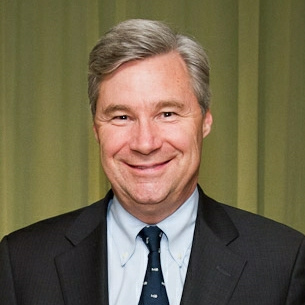
“Our oceans face an unprecedented set of challenges from climate change, pollution, energy extraction, and more,” warned Senator Sheldon Whitehouse, the opening speaker at Blue Vision Summit 4 in Washington, D.C. last week. He went on to suggest we have the power to move from “takers to caretakers of the sea.” (See the full text here.) That power was on full display during the 4th Blue Vision Summit May 13-16 when hundreds of seaweed rebels from more than twenty states came together including many who surged onto Capitol Hill to advocate for a healthy ocean during more than 100 constituent meetings with their elected representatives and staff members.  As of last count these included direct citizen meetings with at least 6 senators and a dozen Congressmen and women.
The Summit opened Monday evening with a Celebration of the Sea in the historic Carnegie Institution whose marble rotunda was decorated with hanging plants that resembled a kelp forest. Blue tables groaned with good organic food and spirits and spirits also soared as 3-400 revelers wandered among stunning underwater images from an “Oceans in Focus” display by the International League of Conservation Photographers. They ate fish, seahorse and turtle cookies, watched ocean themed films, listened to music by Mark Holmes  and an artists panel moderated by Sherman’s Lagoon cartoonist Jim Toomey that included Wyland, Claudio Garzon, Jay Asher and Courtney Mattison. (Did you know they’re also tattoo artists?) This was well reported on in a National Geographic Ocean blog worth checking out.
Tuesday morning’s keynote by Senator Whitehouse was followed by Vice Admiral Peter Neffenger of the Coast Guard who spoke of living in a “wet world without state and coastal boundaries,” and how his service now has to deal with a “new ocean” in the Arctic where melting ice from climate change is opening up blue water trade routes and a rush for oil, fish and other resources. “The Arctic used to be a place to explore, now everyone’s going up there,” he noted but also expressed his belief that, “we have a chance to get it right in a new ocean.” 25-year-old research submersible pilot Erika Bergman spoke of the challenges and thrills of getting it right in the oceans we still have but have failed to fully explore, and how she went from a Star Trek fan to a young scientist diving 1,000 feet below the surface of our own alien ocean world.  She described visualizing science in “opalescent shades of sea color above me that was heat dispersed in the waters of the Gulf stream,” and how she’s now working to use real time social media to teach young people how “science rules,” both from inside her sub but also by getting them down to the shore and into the salty sea.
Tuesday was as jam packed as a school of pilchard with great panels and workshops on Disaster & Restoration (and lessons learned from BP and Sandy), Climate as a Blue Issue, Youth Leadership for a Blue Planet, Working with Congress, Working with Donors -led by the ever hyperkinetic and deeply knowledgeable Chris Palmer – and Thinking Story like a Journalist. A few random highlights included Eric Schwaab of NOAA pointing out that with more extreme weather events billion dollar plus disasters are on the increase, including 25 in the U.S. just in 2011 and 2012. Clay Maitland of NAMEPA suggested that if company leaders faced jail time, there’d be fewer preventable disasters like the 2010 BP blowout. On the Climate panel Mike Tidwell of the Chesapeake Climate Action Network stressed the need to “build big coalitions and never ever give up,” using as an example the coalition built to pass the “Maryland Offshore Wind Act,” that should get offshore wind power production up and running in the next few years. The immediacy of the crisis was emphasized by Gordon King of Taylor Shellfish, a large aquaculture company in Washington state whose oysters are already being impacted by ocean acidification, with larval survival declining since 2006. He expressed his personal doubt that action will be taken in time to protect our seas.
There was no doubt on the Youth leadership panel however that new ways of thinking and finding solutions to the challenges facing our blue world can be realized. Organized by this year’s Christopher Benchley Youth Award winner Sean Russell, this panel included previous Benchley winner Rudy Sanchez and representatives from Teens4Oceans, 5 Gyres, EarthEcho, Youth Service America and the New York Harbor School with its “billion oyster project” to restore New York Harbor. “Youth are not our leaders of the future,” one panelist noted, “but today’s change makers that adults need to partner with.”
 That evening saw a number of Summit spin-offs including a screening of the film “Ocean Frontiers,” a Georgetown reception to promote marine “Hope Spots” in the Arctic and Antarctica, that Sylvia Earle called “a bipolar occasion,” before toasting the seas. Many more toasts were raised at Stoney’s Bar and Grill where a Seaweed Happy Hour was underway.
“Be yourself and don’t be afraid to let your passion for the sea show. This is the  biggest ocean hill day ever and its creating a buzz that will keep getting around,” Ocean Champion’s Dave Wilmot noted the following morning as blue troops gathered at 8am in the Dirksen Senate Office building for a long day of “walking the marble.” Among the largest state contingents were 34 watermen and women from California and 20 from Colorado who understand that every state is a coastal state. Senator Brian Schatz from the totally coastal state of Hawaii greeted us. He recalled the beginning of his calling as an ocean and climate advocate when he couldn’t go bodysurfing at Sandy Beach on Oahu when he was 16 because the water was polluted. Other of our greeters included Representatives Jared Huffman and Lois Capps
  of California, Chellie Pingree of Maine and Kathy Castor of Florida. We then spent a full day hiking the labyrinth hallways, basements and trolleys of the Capitol complex.
In seemingly countless meetings (actually we counted just over 100) folks advocated for the commonsense National Ocean Policy now getting implemented (but opposed by the offshore oil industry), thanked Senators who voted for Whitehouse’s National Endowment for the Ocean and promoted a safe seafood act and another bill to fight pirate fishing. Many meetings were productive and many follow up meetings are planned back in the home districts and states of those we met with.
That evening was both elegant and inspiring as the 6th annual Peter Benchley Ocean Awards, co-hosted by Wendy  Benchley and Blue Frontier, got underway in front of some 350 guests back at the Carnegie. “Her deepness,” Sylvia Earle was this year’s Master of Ceremonies. Both presenters and award recipients spoke passionately of their work to restore and protect our blue home. This year’s winners were President Macky Sall of Senegal, Dr. Boris Worm and Dr. Heike Lotze, Nancy Baron and COMPASS, Sean Russell, Karen Garrison and Kaitilin Gaffney, for more about them please check out our website.
 Representative Ed Markey of Massachusetts was delayed and so received his Policy Award from Senator Whitehouse at the Benchley awards dinner with the Rhode Island Senator joking about “typical House disorganization” (Markey is running for the Senate after three decades in the House). “You gave this (Policy) award to the Ocean State last year and the Bay State this year,” Markey noted. “So I see a trend. But if you want to give it to someone from the Pelican State of Louisiana next year you’ll have to change the criteria,” he joked. An unabashed democratic partisan, Markey, like Whitehouse and Schatz, is also a fierce proponent of ocean protection and climate action. The protection of the blue in our red, white and blue ought to be a bipartisan issue and will be as long as both parties are willing to embrace it.
Thursday morning Sean Cosgrove of CLF led the report backs from the state delegations who’d been on the Hill and most folks spoke of how empowered they felt speaking truth to power and realizing they could be an influence. “This is my first trip to D.C. since eighth grade and we met seven people yesterday and I got to speak with my Congressman.” “This is my first time doing this and I’d like to do it again.” “I talked to my representative but I don’t think I convinced him so we’ll get him at home with our students who are active.” “I was with the California delegation so it was sort of a love fest for us.” These were typical of the comments we heard before people went into the details of their meetings.
 “It doesn’t always take millions of dollars. At the end of the day you can change the course of history…you can build relationships from the bottom up” anti-offshore oil activist Richard Charter told the group in a talk on next steps we can all take. He was joined by Blue Frontier board member and Rainforest Action Network founder Randy Hayes who gave examples of theatrical protests and acts of civil disobedience he’s launched that can also be effective tactics to turn the tide for our blue planet. The Summit’s final speaker was 2009 Benchley Policy Award winner Rep. Sam Farr of California who’s been a part of every summit since the first in 2004 and who recounted the anti-offshore oil battles of the 1980s that led to protection of California’s central coast. “The politics of the ocean is still fresh,” he said, “and the blue revolution’s still young.”
His aide gave me the first indicator that we’re schooling in the right direction when he told me that more than twenty new members of Congress had signed onto Rep. Farr’s “Dear Colleague” letter in support of National Ocean Policy as a result of our Hill visits.
We’ll have many more accurate measures and results to report on from the Blue Vision Summit (including video & more photos) in the weeks and months to come as well as follow up on additional ocean and coastal actions by Benchley winners and others. Some of what we did last week, like having a plastic free conference with tasty organic and vegetarian food was greatly appreciated by those who participated. I greatly appreciated the tireless work of Blue Frontier Associate Director Mary Kadzielski, Volunteer and Hill Day organizer Gina  Davenport, our interns, volunteers and the more than 30 sponsors and various committees who worked on the Summit, also Wendy Benchley, Laura Bowling and other Peter Benchley Ocean Award organizers. I’ll thank you all in person and leave this last bit for a final thought. Even with all the threats we face including carbon dioxide reaching 400 parts per million in our atmosphere (and 90 percent of global warming heat trapped in our ocean) we can’t scientifically know for certain if its too late to prevent a global marine disaster. All we know for certain is if we don’t try we lose. We tried with heart, joy and power this past week. The Blue Revolution remains strong.

Blue Vision Summit | Peter Benchley Ocean Awards | Make a Donation | Blue Movement Directory
Find us on


